


Labeling and customs clearance of goods
How to prepare goods for sale on marketplaces: labeling rules and the customs clearance process
Leave your contact details, and our manager will contact you within one hour.
Why you should contact TTL
TTL specialists provide full support for import procedures in compliance with all legislative requirements. The company operates its own warehouse facilities, where professional product labeling is carried out in a customs warehouse using modern equipment.
Experienced staff are familiar with all aspects of Russian legislation and help clients avoid mistakes when preparing documentation. TTL guarantees compliance with deadlines and high-quality execution of all required procedures for the successful import of goods into the country.
Product labeling for customs clearance
Each product group has specific requirements for applying information markings. Textile products must include data on material composition, country of origin, and sizes. Food products require indication of the expiration date, storage conditions, and proper product labeling necessary for customs clearance in the Russian language.
Electronic equipment is subject to mandatory certification with the application of a conformity mark. Medicines and medical devices undergo a special registration procedure. Children’s products are labeled with age restrictions and safety requirements.
Information must be applied using indelible ink or embossing methods. Font size is regulated by technical standards for each product category. Verification of the readability of all inscriptions and symbols is a mandatory stage of quality control.
Features of product labeling during import
Imported goods undergo additional verification for compliance with Russian quality and safety standards. Documents from the exporting country are translated into Russian and notarized. Certificates of conformity are issued by accredited bodies in accordance with customs regulations on product labeling.
Some categories of goods require permits from relevant authorities. Alcoholic products are subject to excise control with the application of federal special stamps. Tobacco products are labeled with special marks of the traceability system.
Manufacturers and importers receive identification codes for each unit of goods in the state information system. The system allows tracking product movement from the warehouse to the end consumer. Registration is mandatory for all participants in the supply chain.
Documentation workflow and clearance timelines
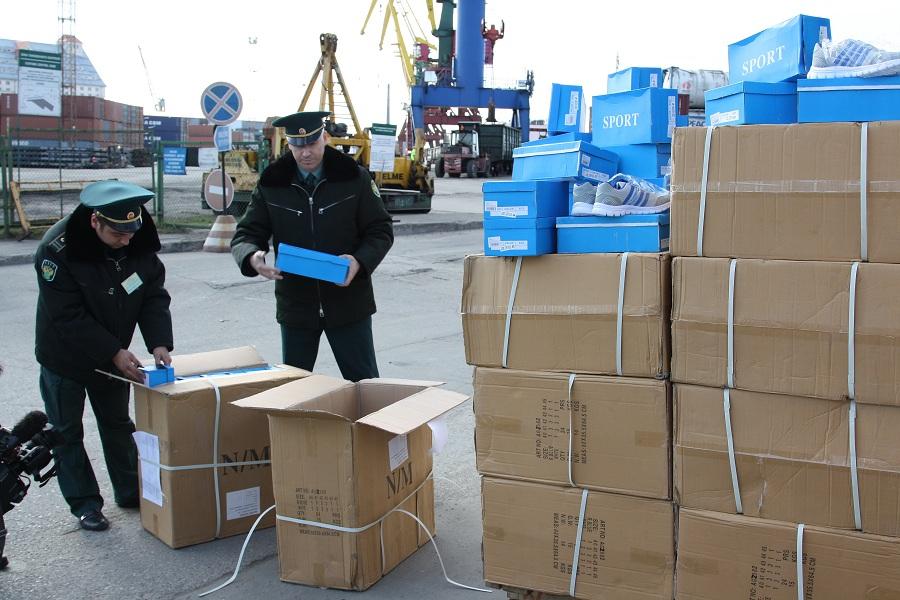
Document preparation begins before the cargo arrives at the port of destination. The declarant submits a preliminary declaration with key information about the goods. Customs authorities conduct a preliminary risk assessment and determine the form of control using customs clearance and labeling procedures.
According to the Federal Customs Service: «The average customs clearance time for imported goods in 2024 was 1.8 hours with electronic declaration».
The complete document package includes the invoice, packing list, transport documents, and quality certificates. Product examination requires the submission of samples for laboratory testing. The duration of analysis depends on the complexity of the examination and laboratory workload.
Electronic declaration speeds up document processing and reduces the risk of errors. The automated system verifies the accuracy of declarations and the compliance of classification codes. Participants in foreign economic activity receive real-time notifications on review status.
Warehouse operations and quality control
Temporary storage of imported goods is carried out in licensed warehouses under customs control. Warehouse operators are responsible for cargo safety and compliance with the established regime. Access to goods is restricted until all clearance procedures are completed in accordance with formal requirements.
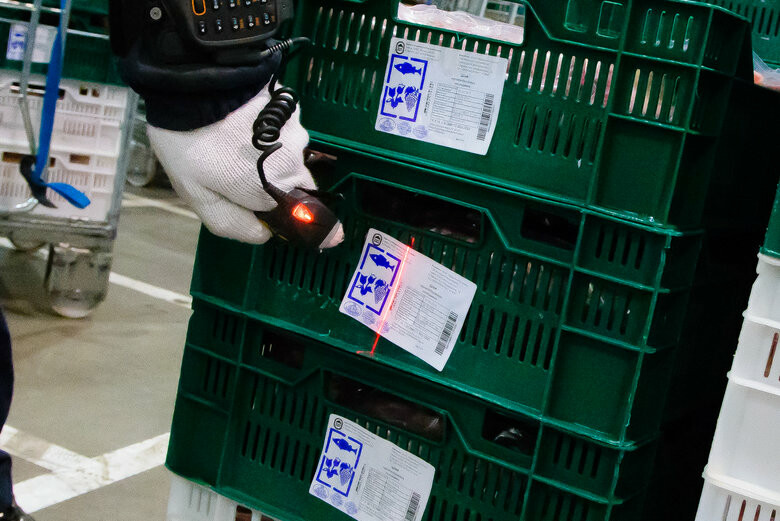
Specialized equipment applies identification codes, barcodes, and mandatory textual information under the supervision of authorized personnel. Print quality is checked using scanners and machine vision systems. Each operation is recorded in an electronic log.
The main stages of customs product labeling in the warehouse include:
- Verification of the presence of mandatory information — composition, country of origin, product name, and purpose in accordance with EAEU requirements.
- Application of labeling in the Russian language in compliance with technical regulations, including barcodes, conformity marks, and expiration dates (where required).
- Recording the labeling process in accompanying documentation — reports, packing lists, or registers.
- Conducting selective quality control of labeling by responsible persons or an inspector before submitting the goods declaration.
Modern warehouses are equipped with climate control systems to preserve consumer properties of goods. Video surveillance and access control systems ensure the security of valuable cargo. Automated accounting systems maintain accurate records of the movement of each product item in accordance with legal requirements.
Digital technologies in labeling
The introduction of digital codes has revolutionized the system for monitoring the circulation of goods in Russia. Two-dimensional codes contain encrypted information about the manufacturer, production date, and the product’s supply route. Consumers can verify authenticity using mobile applications and specialized services such as the Honest Sign labeling system at customs warehouses.
Each code is unique and cannot be copied or forged due to cryptographic protection. The system automatically removes from circulation codes of goods that have been deregistered or withdrawn from sale. High-resolution industrial printers ensure high-quality label application.
Integration with government information systems makes it possible to monitor the legality of imported goods in real time. Violations are automatically detected by data analysis systems and forwarded to regulatory authorities. Blockchain technologies ensure the immutability of records on the movement of goods along the supply chain, recording each operation in a distributed ledger. Thus, modern technologies not only protect consumers from counterfeits but also form the foundation for the development of the digital economy, where every product has its own digital history from production to purchase.











Contacts
Leave your contact details, and our manager will contact you within one hour.